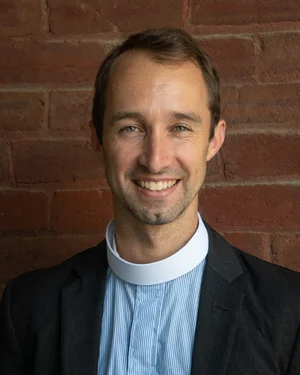
Sam Bush, “Searching for a Heart of Gold”
The summer after I turned 21, I had an itch to go out west so I applied to work at several dude ranches as a horse wrangler. There was just one thing: I had never ridden a horse. Unfortunately, during a phone interview with a ranch manager in Wyoming, horse-riding experience was the first question. The second question was where I was from. By then, the other spots had been taken by young men from Texas, Georgia and Alabama so I did my best southern drawl when I said I was from Boston, Massachusetts. There was a pregnant pause on the other end - I said, “Well, I understand I might not be the ideal candidate” - but to my surprise, the manager said that they teach riding in a very specific way and it’s best to not bring in any preconceptions. I got the job! Now, I don’t need to convince any of you that I am not the archetype of an American cowboy, but it turns out my inexperience was an asset. My ineptitude was an advantage.
Have you ever been chosen unexpectedly? Against all odds, you made the team, you got the job, she was out of your league, but she said “yes!” (I know that’s true for at least a few of you, myself included). These are the best moments of life. It’s better not to overanalyze it. If you try to make sense of your success or convince yourself that you deserved it, the joy will fade fast. This kind of experience is similar to encountering the grace of God. We see these stories all over the Bible, perhaps most clearly in our story from 1 Samuel. Let’s take a look:
At this point, Saul, the people’s choice as the first king of Israel, had started out strong. He had the look, the full head of hair, the square jawline, a head taller than any other man. He was headstrong, though, and proud. His love of the crown overrode his love for God. So God takes matters into his own hands. He tells his prophet Samuel, “I have provided for myself a king” and instructs Samuel to travel to a town called Bethlehem to invite a man named Jesse and his sons to a sacrificial feast. To be in the presence of this prophet would have been a tremendous honor. His news that one of Jesse’s sons would be anointed as the next king of Israel would have been unthinkable.
After the sons have been properly sanctified, they line up for tryouts - chests out, head up, muscles flexed. When Jesse’s eldest son Eliab is presented, Samuel says, “Wow! We have a winner! Surely this is the Lord’s anointed.” Eliab was the #1-seed. But God says “Guess again.” So another son is presented and then another until God has refused all seven sons present. Even Samuel must have felt embarrassed. “Is this everybody?” he asks Jesse. “There remains the youngest,” Jesse says, (the Hebrew word meaning “smallest” or “the runt”), “but he is keeping the sheep.”
Samuel orders for everyone to stand until this final son arrives. They wait and they wait and they wait. Finally, a fourteen year old boy rushes in – unshowered, unsanctified for the feast, uninformed as to what is going on. God says, “This is the one.” Consider it the original Cinderella story. Who is this boy? He’s not leading a coup. He was minding his own business! He would have known very well that the family inheritance belonged to Eliab, that his rightful place was at the bottom of the pecking order. He’s thinking, “Me? I’m just a shepherd!” to which God would have replied, “That is actually exactly what we’re looking for.” You can imagine him saying, “We already have a king! I can’t be king!” God replies, “Every excuse you make is just another reason why it has to be you!”
Samuel takes the ram horn full of oil and pours it over the boy’s head. It drips down his hair as Samuel sings “Baruch haba b'shem Adonai, Blessed is he who comes in the name of the Lord.” Only now does our reading mention his name, saying, “The spirit of the Lord came mightily upon David from that day forward.” This anointing would not culminate in kingship for another fifteen years. David would eventually become Israel’s greatest king. And yet, his reign would ultimately be marked by scandal, adultery, murder and obstruction of justice, the ramifications of which would send his family into turmoil and his kingdom into ruin. We tend to judge whether a decision was good or bad based on the outcome. So, from that angle, it feels like maybe God should have chosen Eliab. It’s fun to choose a 16-seed but it’s not practical. It’s just not how the world works.
But, did you catch what God said to Samuel when Eliab was rejected? “Do not look on his appearance; for the Lord does not see as mortals see; they look on the outward appearance, but the Lord looks on the heart.” Why did God choose David? Well, David seems to know his heart is completely dependent on God. Psalm 42 says, “As the deer longs for water so my soul longs for you, O God.” When he falls into sin, David begs God in Psalm 51, “Create in me a clean heart, O God.” David knows, like Neil Young, you can keep searching for a heart of gold, but all you will find in any human heart is fear, sin and cholesterol.
Here’s the thing: this story is not about David’s heart. It is about God’s heart. When God says “According to God’s own heart” God means that He set His own heart upon David.
Later on in 2 Samuel, David says, “Because of your promise and according to your own heart, you have wrought all this greatness.” You see? David’s heart was not the heart of gold, God’s heart was. The very heart of another king to come from Bethlehem, the King of Love, who would rule and shepherd by laying his life down for the sheep.
Do you see what this means for your life? Where do you feel disqualified? That defect, that “growth area,” that sin, that failure, that regret is actually the thing that makes you so appealing to God. The Apostle Paul tells us, “This saying is sure and worthy of full acceptance, that Christ Jesus came into the world to save sinners.” Not golden boys! Sinners! Is there something you don’t like about yourself? Put it on your spiritual resume! It’s likely much better than all your strengths and assets which are rooted in self-confidence which are (kind of) red flags to God, to be honest. Your weaknesses, on the other hand, will open door after door to grace upon grace.
I’m thinking of the 1974 movie Kramer vs. Kramer (which was one of Meryl Streep’s first movies/ She co-stars in it with Dustin Hoffman). There’s a scene where two single parents - Ted and Margaret - are watching their kids on the playground. Ted’s son Billy is playing precariously at the very top of the jungle gym with a model airplane in his hand. When Billy’s foot begins to slip, Margaret offers to help but is caught up in a story she’s telling. She’s preoccupied and is still telling her story when Billy falls. The scene cuts to Ted, holding his son, sprinting through the city streets to the emergency room. At that point, Billy’s face is bloody and it’s unclear whether or not he’ll lose an eye. Guilt-stricken Margaret watches from the hospital room doorway as Ted sits with Billy who needs ten stitches on his face. By all accounts, Billy’s injury is her fault.
The next scene is at Ted’s apartment. Billy is safe in bed, his eye OK but his face will have a scar. Margaret is at the sink sheepishly washing dishes as Ted walks in. She says, “Ted, I’m so sorry. I feel completely responsible.” But Ted interrupts her and says, “Margaret, listen. I want to ask you a favor, OK. It’s a big favor. If something were to happen to me, you know if a building fell on me or something, I just want to know if you would consider taking care of Billy. I’ve put a lot of thought into this and I can’t think of anyone I would trust more and I know you’d be OK with him.” Despite everything, despite all evidence to the contrary, Ted chose her to be Billy’s guardian.
We all have vocations, we all have callings: mother, father, employee, mentor, friend. And, truth be told, we will fail at those callings. And those failures may even have massive implications. But they do not negate what God has called into being. You see, God has made a decision. He did not ask if you were on board with His decision; He has simply decided. He has weighed the risks. He knows what He’s getting into and has decided to move forward with his decision which, through the Cross, can never be undone. What exactly has he decided? “I am the Lord your God. I have called you by name. You are mine.”
Amen.